
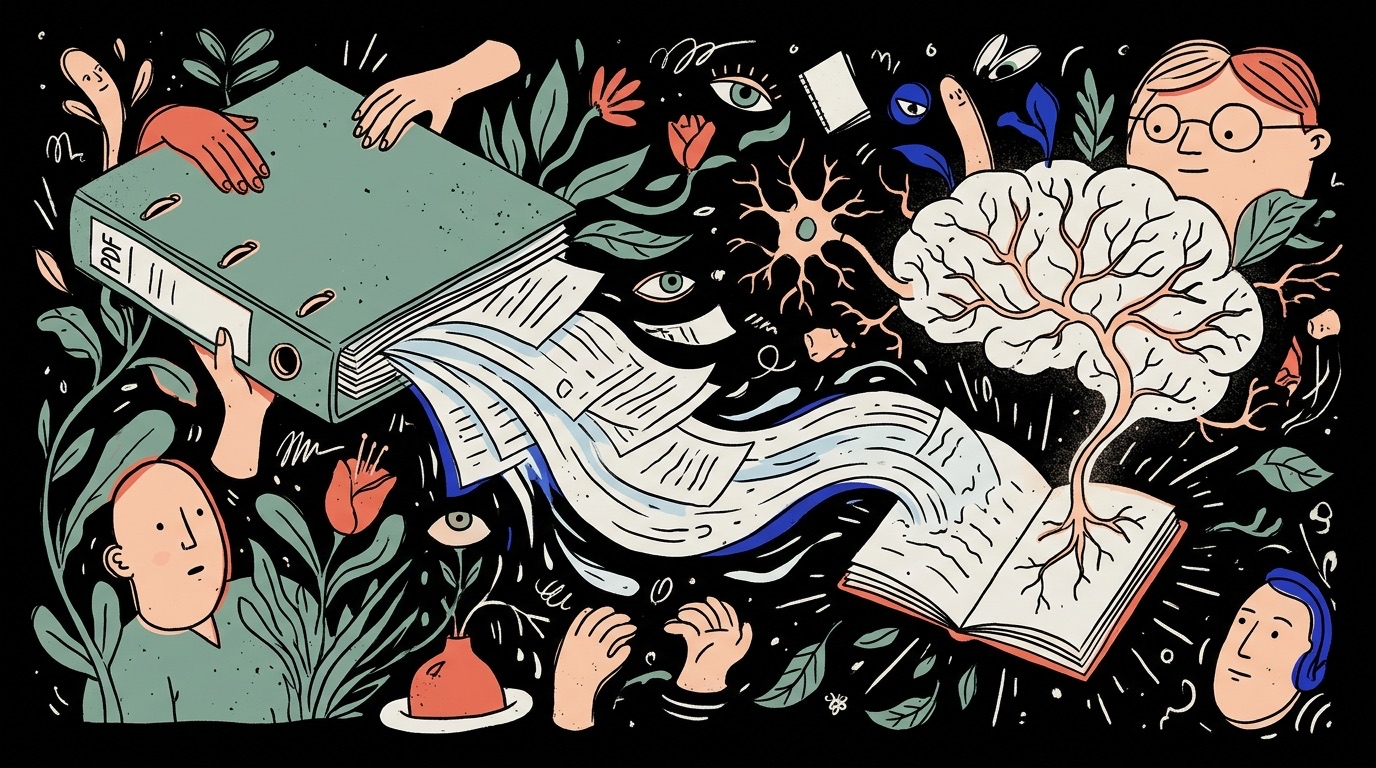
The 200-Page PDF Problem
Every creative team has one. A brand bible. A client brand book. A style guide. 200 pages, sometimes more, built painstakingly over years. Visual identity, tone of voice, product positioning, audience personas, example campaigns, do's and don'ts.
Nobody reads it.
Not because the team is lazy. Because 200 pages of PDF is not actually usable during a 30-minute concepting sprint. By the time you've opened the file, found the right section, re-read the tone of voice guidelines, cross-referenced the audience notes, and worked out what applies to the task in front of you, the momentum is gone.
So people don't open it. They work from memory. And brand consistency becomes a function of how long someone has been on the account, not how well the brand system is documented.
This is the most solvable expensive problem in creative operations right now. And the fix is in the Spark AI 2026 report under one of its seven use cases: the "Brand Brain."
The Shift From Static File to Interactive System
The principle is simple. Instead of treating the brand book as a document to consult, treat it as a knowledge base to query.
Load the full brand documentation into a Claude project, a NotebookLM workspace, a Microsoft Notebook, or a Google Gem. Whatever platform you're on, the functionality is the same — a dedicated AI workspace with hundreds of documents inside it, grounded in that specific brand, that your team can query in plain language.
Instead of "open the 200-page PDF and find the tone of voice section," it becomes "ask the brand brain if this headline fits the tone."
Instead of "find the competitive positioning deck from last year's strategy refresh," it becomes "summarise how this brand positions against their top three competitors."
Instead of "dig through the archive to find the last sustainability campaign we made," it becomes "show me every piece of sustainability work we've made for this client and what angle each one took."
The brand book stops being a reference document and becomes a working partner.
Why This Is the Highest-Leverage Use Case
Spark's research across 70+ agencies surfaced seven practical AI use cases that teams are actively deploying. The Brand Brain keeps coming up at the top of the list — not because it's the most sophisticated, but because of how much leverage it creates per hour of setup time.
Three reasons.
Onboarding collapses from weeks to days. New creatives get up to speed on a client account by asking the brand brain plain-language questions. "Read these documents and explain the brand's core values to me as if I were a designer joining the account today." The quote in the Spark report is literal — this is exactly how teams are using it.
Institutional knowledge stops walking out the door. When the senior strategist who's been on the account for six years leaves, their understanding of the brand currently leaves with them. If that understanding is loaded into a shared brand brain — including call transcripts, meeting notes, past strategic decisions and their rationale — the agency keeps the capability.
Junior team members produce brand-consistent work faster. Instead of needing a senior to review every piece of work for brand alignment, juniors query the brand brain themselves for a first-pass check. Seniors spend less time on brand-consistency reviews. Juniors learn faster because they're getting rapid feedback grounded in the brand's actual documentation.
How to Actually Build One
Not theoretical. Here's the setup I'd recommend if you're starting tomorrow, based on what works across the teams we've trained.
Pick one client first. Don't try to build brand brains for every account at once. Pick the client where the onboarding pain is worst, or where the brand consistency issues are loudest. Build one brain properly before scaling the pattern.
Gather the inputs. You want four categories of material loaded in. Brand documentation — the formal guidelines, tone of voice documents, visual identity systems. Campaign history — past work with notes on what worked and why. Strategy artefacts — briefs, research, positioning documents, audience work. Institutional knowledge — call transcripts, meeting notes, senior strategist memos.
Choose your platform. NotebookLM and Microsoft Notebook are strong because they can handle hundreds of documents and ground their answers only in what you've given them — so they won't hallucinate brand opinions from the wider web. Claude projects work well too. Pick based on what your agency already has enterprise licences for.
Name it and make it findable. Don't call it "Acme Brand Brain v3." Call it "Acme." Put the link in the Acme project folder. The second anyone starts working on anything Acme-related, the brain should be the first thing they open.
Use it for onboarding, not just production. When a new person joins the account, day one is "spend two hours asking the brain every question you've got." By the end of that session they know more about the brand than most people who've been on the account for three months.
The Scaled Version
Once you have one working brand brain, the scaled version is where the real operational leverage shows up.
Integrate the brand brain into your content production workflow. When a creative submits a draft, the brand brain automatically checks it against the guidelines and returns feedback before a human reviewer ever sees it. You've just cut the first review cycle out of every piece of work.
Connect it to your DAM so it can reference approved assets and past work when generating new concepts. Now the brand brain can answer not just "is this on-brand" but "has this brand done something like this before, and what angle did they take last time."
One use case the Spark report highlights specifically is a TOV coach — a copywriter pastes a draft into the brand brain, gets a critique against brand guidelines with an explanation of why something is off-brand and how to improve it. Keeps human judgement in the process. Accelerates the learning curve for junior writers dramatically.
Why You Should Do This This Week
The setup for one brand brain, for one client, takes a focused team half a day. Maybe a full day if the documentation is messy.
The return is measurable by week two. New joiners onboard faster. Brand-consistency review cycles shrink. Junior work comes in closer to final on first pass. Senior time frees up for strategy and direction.
It's one of the rare use cases where the ROI is this clear, this fast, and this replicable across accounts. Build it once. Then do the next one. Then the next.
The agencies that are three accounts in by end of Q2 will have a capability their competitors won't have matched until Q4. That's the kind of compounding advantage that's worth starting on this week.