

The Wrapper Tax
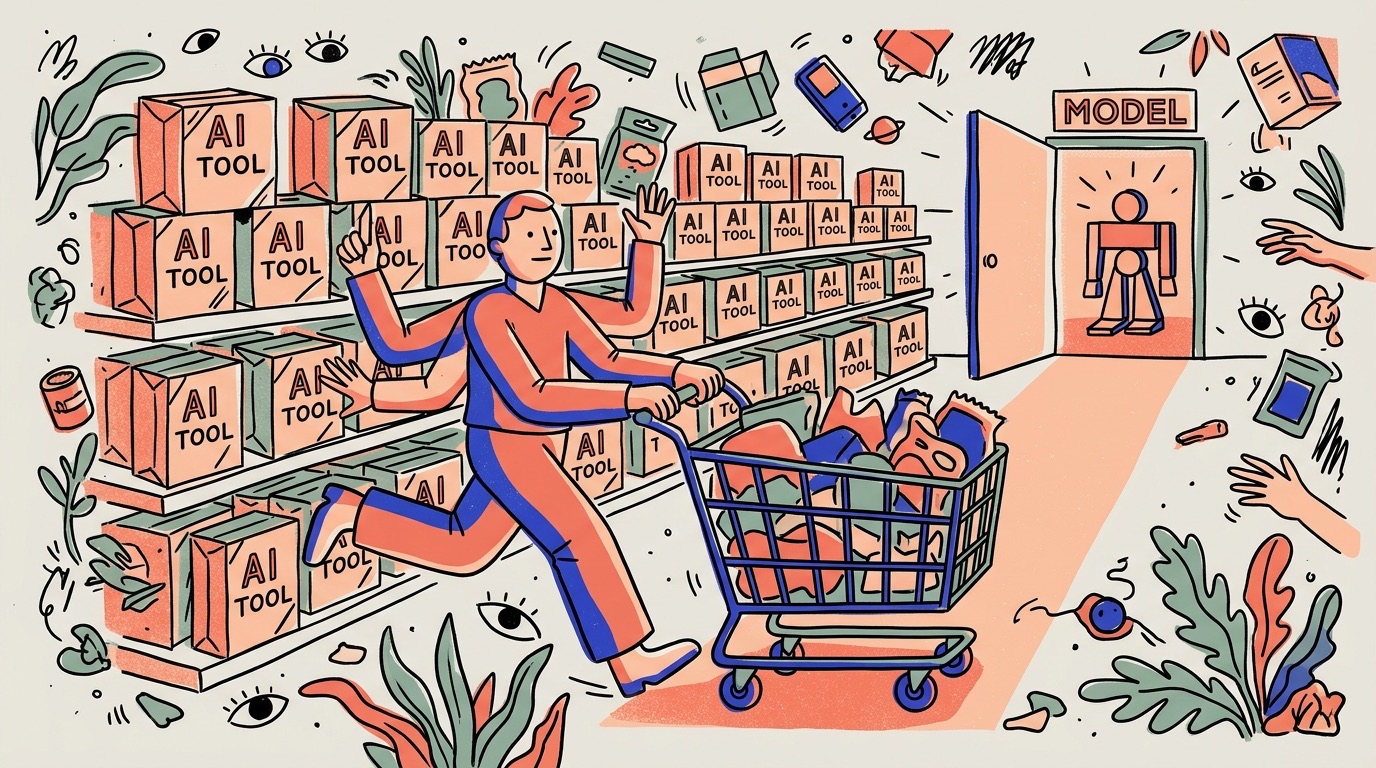
Every week someone sends me a new AI tool. "Jeremy, have you seen this? It does brand voice!" or "This one generates social posts automatically!" The pitch is always the same: we took Claude (or GPT), added a nice interface, and now it costs $49/seat/month.
I've been evaluating these tools for three years. The pattern never changes. They take a frontier model, wrap a UI around it, lock down the settings, and charge you for the privilege of using someone else's system prompt. I call this the Wrapper Tax. You're paying 3x for less flexibility.
Here's the problem nobody talks about: when you evaluate a third-party tool, you're not evaluating what the underlying model can do. You're evaluating the tool vendor's choices and constraints. Their system prompt. Their temperature settings. Their decision about which features to expose and which to hide. You're seeing the model through a keyhole and judging the whole room.
What You Lose When You Go Indirect
The costs are real and they compound.
You lose speed. Anthropic ships new Claude capabilities constantly. Extended thinking. Projects. Styles. Memory. MCP connectors. When you're on the platform direct, you get these the day they launch. When you're on a wrapper, you get them whenever the vendor decides to integrate — if they do at all.
You lose flexibility. The whole point of a wrapper is to simplify. Which means someone else decided what you can and can't do. Can't change the system prompt. Can't adjust the model. Can't connect to your own tools. The simplification that attracted you in the first place becomes the ceiling that limits you six months later.
You lose economics at scale. A wrapper that costs $49/seat/month across a 30-person team is $17,640 a year. A Claude Max subscription for the 5 people who actually need heavy usage, plus team access for everyone else, costs a fraction of that — and does more.
You build dependency, not capability. This is the one that matters most. When your team learns a wrapper, they learn that wrapper. When they learn Claude directly, they learn a platform that compounds. Every project they build, every style they create, every system prompt they refine — it carries forward. Wrappers are rented capability. The platform is owned capability.
What Going Direct Actually Looks Like
Going direct to Claude isn't just "use the chat window." That's where most people stop, and that's why they think they need a wrapper. The real power is in the configuration layer.
System prompts tell Claude who it is for your business. Your context, your constraints, your expectations — loaded automatically into every conversation. This alone replaces half of what wrappers charge for.
Projects give you dedicated workspaces with their own instructions, files, and conversation history. One project for client proposals. One for content strategy. One for competitive analysis. Each with the right context pre-loaded.
Styles control how Claude communicates. Your brand voice, your formatting preferences, your tone. Create it once, apply it everywhere. Switch between styles mid-conversation when you need a different register.
Memory lets Claude learn about your business over time. It remembers your preferences, your past work, your team's patterns. Every interaction makes the next one smarter.
None of this requires technical skill. It requires intention. You have to decide what you want Claude to know, how you want it to behave, and what context it needs. That's strategy, not engineering.
Why This Matters for Teams
When I train teams — whether it's a creative department at a Fortune 500 or a 15-person startup — the first thing we do is get everyone off the wrappers and onto the platform. Not because the wrappers are terrible. Some are genuinely well-built. But because the wrappers create a false ceiling.
The team that learns to configure Claude directly is the team that builds real organizational capability. They create shared projects with institutional knowledge. They build system prompts that encode their methodology. They develop styles that maintain brand consistency without a brand police.
This is what we teach at NotContent. Not which tool to buy — how to build on the platform directly. Because the tool landscape changes every quarter. The platform compounds every month.
The Decision Framework
If you're evaluating AI tools for your team, here's the test:
Does this tool give me access to capabilities I can't get from the model directly? If yes — and the tool genuinely adds value beyond a UI — it might be worth the premium. Some specialized tools in image generation, video, or data analysis legitimately extend what the base model can do.
But if the tool is primarily wrapping a conversation interface around Claude or GPT with some pre-built prompts? You're paying the Wrapper Tax. And your team is learning someone else's system instead of building their own.
Go direct. Configure it properly. Build capability that compounds.