
The Rejections That Have Nothing to Do With Quality
Every creative team has lived through this. You ship a piece of work. The team believes in it. The strategy is sound, the craft is good, the strategic fit is obvious.
The client says no.
Sometimes the reason surfaces. "Our CFO is focused on margin this quarter and this feels expansionary." "Procurement wants us to reduce agency spend." "We're actually pivoting the brand toward sustainability and nobody mentioned it."
Sometimes the reason never surfaces. The work just "doesn't land." A vague piece of feedback. A rewrite request that doesn't quite make sense. A kill, with nothing actionable.
Most creative work that gets rejected in those ways doesn't die for quality reasons. It dies because the room contained information nobody on the agency side had. Priorities buried in a quarterly report. KPIs that never showed up in the brief. Strategic shifts that never got cascaded down.
You cannot fix that with better craft. You can only fix it by getting the hidden information into the room before the work ships.
That's what a virtual stakeholder does.
What This Actually Is
The Spark AI 2026 report documents this as one of the seven practical use cases that agencies are actively deploying right now. The configuration is straightforward.
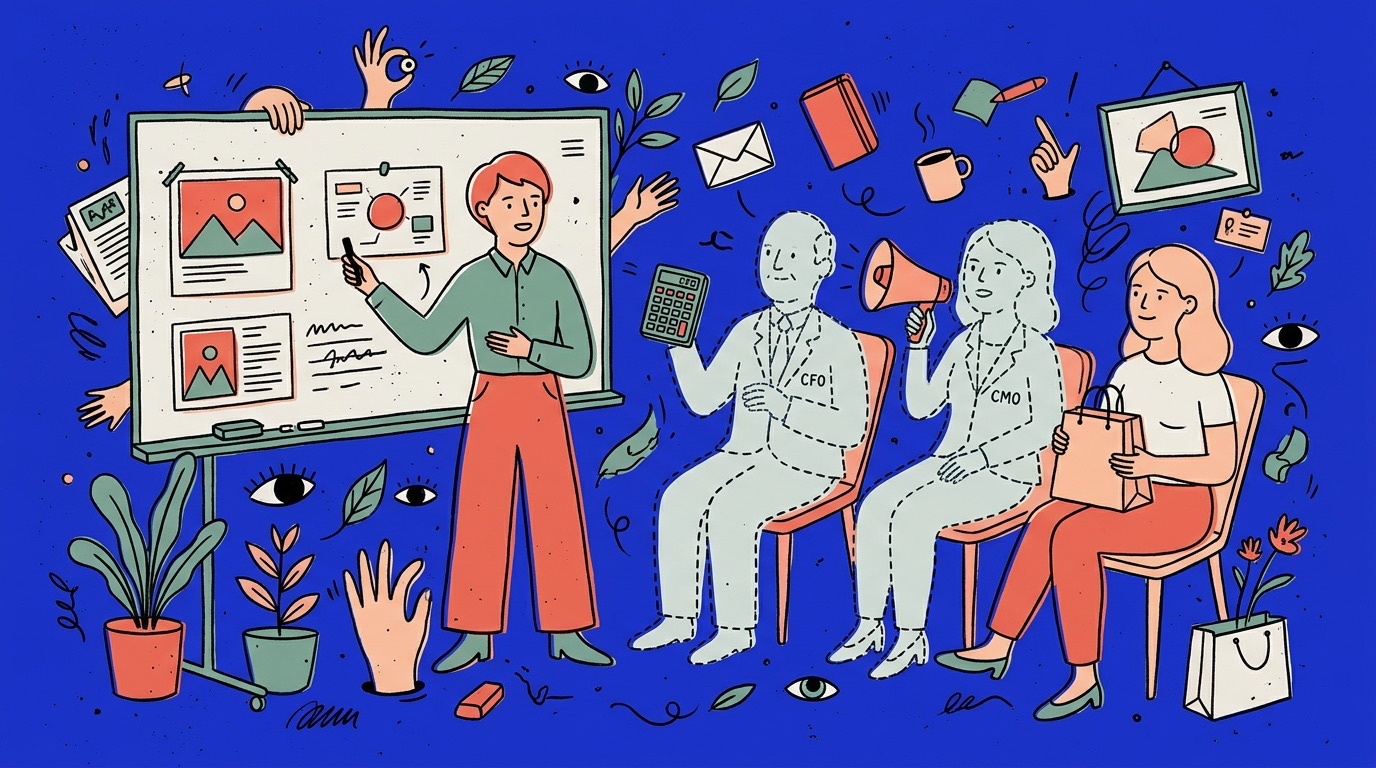
Build a synthetic persona of a critical stakeholder on the client side. A CFO. A CMO. A procurement lead. A brand custodian. An end-consumer archetype. Anyone whose reaction will shape whether the work gets through.
Ground the persona by loading relevant documentation into it. Their public statements. Their quarterly reports. Their recent interviews. Internal documents they've written that you have access to. Previous correspondence. Project briefs they've issued. Strategic plans they've authored.
Then run your work through them before the client does.
The AI doesn't replace the real stakeholder. That's not the point. It simulates the pressure their real perspective would apply. Which means you find out what might frustrate them, what won't resonate, what they'll ask for, what they'll push back on — while you still have time to respond.
Why It Works
Two reasons.
First, the AI is operating on documented evidence, not guesswork. When you ask a synthetic CFO persona to react to a creative proposal, it's pattern-matching against the real CFO's written record — their public priorities, the metrics they talk about, the language they use. It's not a random opinion. It's a grounded critique.
Second, and more importantly, the exercise forces the agency team to think through stakeholders they normally don't consider until it's too late. You don't usually prepare for the CFO's reaction. You prepare for the CMO you're presenting to. The virtual CFO forces you to imagine the second room — the one you're not in — where your work gets discussed after the pitch.
That second room kills more good work than the room you're in.
Real Examples From the Spark Report
Two examples the report documents.
A business development lead used a persona to refine a cold outreach. The AI told him his note was "too focused on culture rather than sales metrics." He rewrote it. It landed.
A synthetic persona identified a shift in client strategy from a previous workshop that the human team had overlooked. The presentation was reshaped to address the strategy shift. The work landed where it otherwise would have missed.
These are not dramatic examples. They're ordinary examples — the kind of save that happens constantly when the tool is in use. Small, practical interventions that prevent predictable losses.
The Starter Configuration
Here's the version your team can build this week.
Pick one client where stakeholder misalignment is a recurring problem. Think about the accounts where work gets killed for non-craft reasons. That's your first use case.
Identify one critical stakeholder on that client. Probably not the day-to-day contact. One layer up — the person whose priorities shape approval but who isn't in the weekly meetings.
Gather the grounding material. Their public statements, published work, LinkedIn posts, interviews, quarterly reports if they're a C-suite. Plus any internal documents they've authored that you have access to through your client relationship. Client briefs they've signed off. Emails in the thread history.
Set up a dedicated persona in Claude projects, ChatGPT custom GPTs, Gemini Gems, or Microsoft Copilot — whichever platform your team uses. Load the grounding material. In the instructions, give the persona their role, their perspective, the metrics they care about, the language they use.
Run three tests before going live. Feed it an old piece of work that landed. See what the persona says. Feed it an old piece of work that didn't land. See if the persona identifies the reasons it didn't. Feed it current live work. Evaluate what you get back.
If the persona is calibrated well enough, the first two tests will match your actual experience. That's when it becomes a useful tool for the third test.
The Scaled Version
Once one persona works, the scaled version the Spark report highlights is to build a panel of synthetic stakeholders that review work in sequence.
A procurement persona reviewing cost and scope. A sustainability lead reviewing brand alignment with stated values. A CMO reviewing strategic fit. An end-consumer archetype reviewing emotional resonance. Each one grounded in real documentation for that stakeholder or archetype.
Link them together in a simple workflow — Google Workspace Studio or Microsoft Copilot Studio can do this — and automate the review. When a creative submits a draft, the panel reviews it in sequence. The feedback gets posted as an email or Teams message. The creative team sees four distinct critiques before a human reviewer ever gets involved.
Make it a routine step before every deliverable. The Spark report's framing is right: this doesn't replace human judgement. It adds a layer of pressure-testing most teams can't otherwise afford in time or budget.
The Mental Shift
The thing I most often have to help teams past with this use case is the feeling that it's "fake" or "not real feedback."
The right frame is that a synthetic persona is a structured way of holding the team to a higher bar. It's not a replacement for the real client conversation. It's a way of forcing the team to consider perspectives they otherwise wouldn't — before the work leaves the building.
Teams that integrate this into their process consistently ship work that survives client review better. Not because the AI's critique is perfect, but because the exercise of preparing the work against multiple imagined perspectives produces stronger work.
It's a cheap upgrade to your creative quality assurance. Start with one persona this week.