

What Monks Actually Did
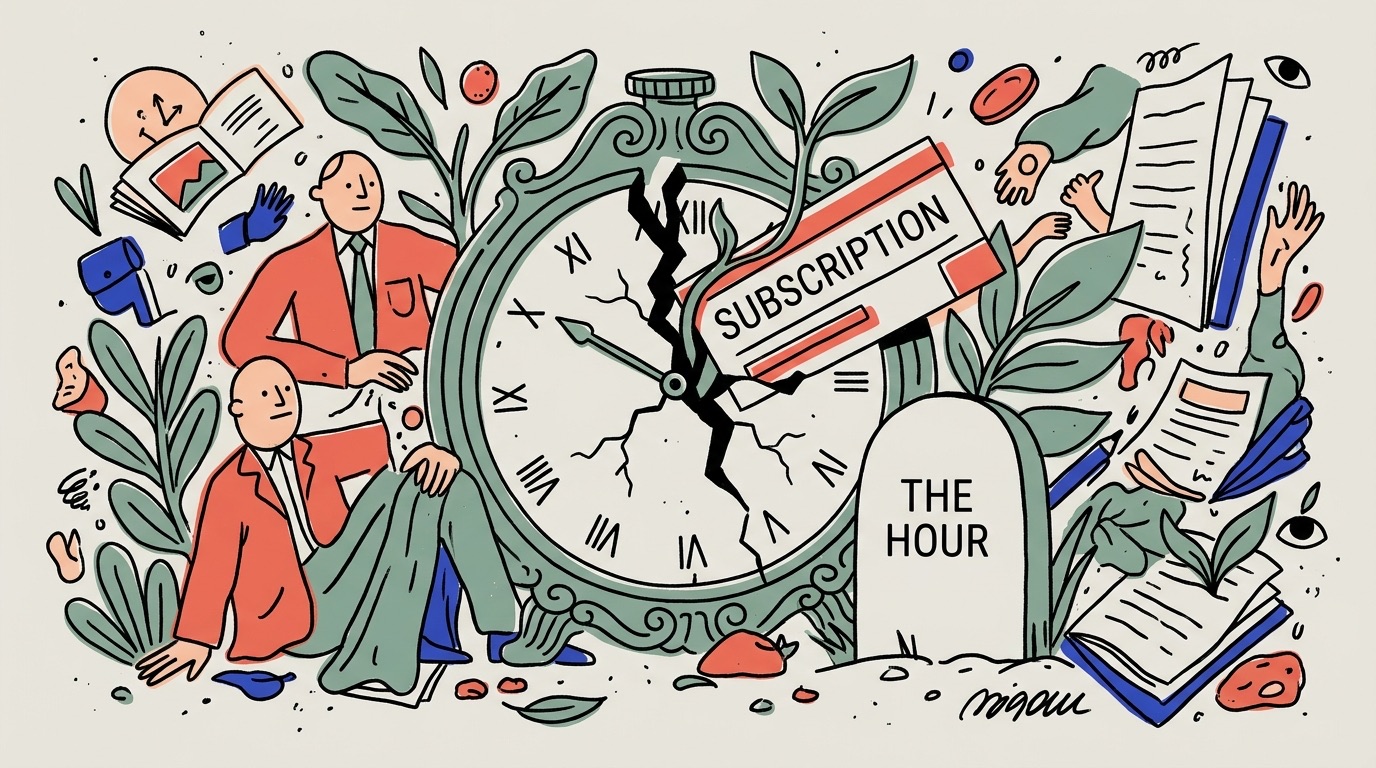
In early 2026, S4 Capital's Monks made a quiet announcement that deserved more attention than it got. They're moving away from the billable hour.
Reported in Digiday and documented in Spark AI's 2026 industry report: Monks is transitioning to a subscription model, giving clients ongoing access to senior talent, AI-powered workflows, and institutional knowledge. They're targeting 25% of revenue from subscriptions by the end of 2026.
Not 2028. Not when-the-market's-ready. End of this year.
This isn't an experiment. It's a structural bet. And it's being made by one of the biggest agency holding structures on earth.
Why the Biggest Player Bet First
The obvious read is that Monks has scale. True. They have 27,000 monthly users on internal AI platforms and report 50% reductions in delivery hours through their Monks.Flow agent ecosystem. The per-hour model is broken for them first because they're the ones automating the hours.
But the quieter read matters more. Monks isn't betting against the billable hour because AI made the hours cheaper. They're betting against it because the relationship between the hour and the value delivered has broken in a way that can't be fixed inside the old model.
If your team ships the same campaign in three days that used to take three weeks, you cannot price it by the hour. The math doesn't work for either side. The agency has to eat the margin or the client has to pay a weird-looking rate.
The alternative is pricing for the output. Per asset. Per campaign. Per month of access to a team.
That's the bet Monks is making. And they're making it with the biggest network-agency war chest in the business.
What the Networks Are Actually Building
Context on the scale of investment. From the Spark report:
- WPP is spending £300 million annually on AI, with 27,000 monthly users on its Open platform and custom "Brains" fine-tuned on client data
- Publicis has invested €300 million, building its agentic AI platform in partnership with NVIDIA
- Monks reports 50% reductions in delivery hours through its Monks.Flow agent ecosystem
These are not trials. These are infrastructure bets designed to lock in competitive advantage for the next decade.
The message underneath those numbers is that the big players are preparing to compete on a different axis. Not "who has the best AI tools" — everyone will, eventually. The axis is "who has the operational infrastructure to deliver outcome-priced work profitably at scale."
Why Independents Don't Need to Copy Them
If you run a 20-person agency, £300M is not a budget item. You can't match the infrastructure. You can't match the agentic platforms. You can't match the enterprise-tier data partnerships.
You also don't need to.
The same Spark report points out what most independent agency leaders miss: a 30-person team can move from idea to implementation in weeks rather than quarters. You have focus. You have fewer stakeholders. You have a shorter path from "let's try this" to "it's running in client work."
The advantage is structural. The networks are investing hundreds of millions in platforms that have to serve thousands of people across dozens of markets. A focused independent agency can build AI capability tightly around its distinctive positioning — in ways the networks structurally cannot.
Tuncarp — another agency the Spark report features — rebuilt its entire production model around AI-enabled roles. Per-asset cost dropped from around £20K to £5K. Margins stayed at 70 to 80%. Publicis then hired them as the network's dedicated AI content studio.
That's an independent agency winning work directly from the biggest network in the world. Not by copying the network's scale. By focusing.
What to Do This Quarter
The billable hour isn't dying next month. Legacy contracts, procurement habits, and cultural momentum will keep hourly pricing alive for years. That's not the question.
The question is what you put in place now, so that when you need a new commercial model for AI-assisted work, you have one.
Start with one workflow. Not the whole agency. Pick one well-defined deliverable — a campaign asset, a strategy sprint, a monthly content retainer — and price it for output, not time. Document what it takes to deliver. Hold the margin where it needs to be.
Pick your archetype. The Spark report identifies four — the Creative Differentiator, the Operational Realist, the Systems Architect, the Performance Engine. Most agencies are trying to be all four at once, and failing. Pick one. Make the AI investment reinforce it.
Tell your clients the truth. Update your proposals. Lead with how you solve their business problem, not with a rate card. Show them the AI edge — extra creative routes, deeper research, faster iteration — and price the outcome accordingly. Teams that openly discuss their AI approach with clients report significantly stronger client trust, per the Spark findings.
Read the Signal
The biggest agency on the planet just made a public bet against the billable hour. Not as a PR move — as a commercial strategy.
You don't have to be right behind them. You don't have to copy them. But you do have to have a point of view about what your own commercial model looks like in 2028, because the one you're using now will be less defensible every quarter.
The independent advantage is that you can decide and act in weeks. The networks take quarters. Use that.